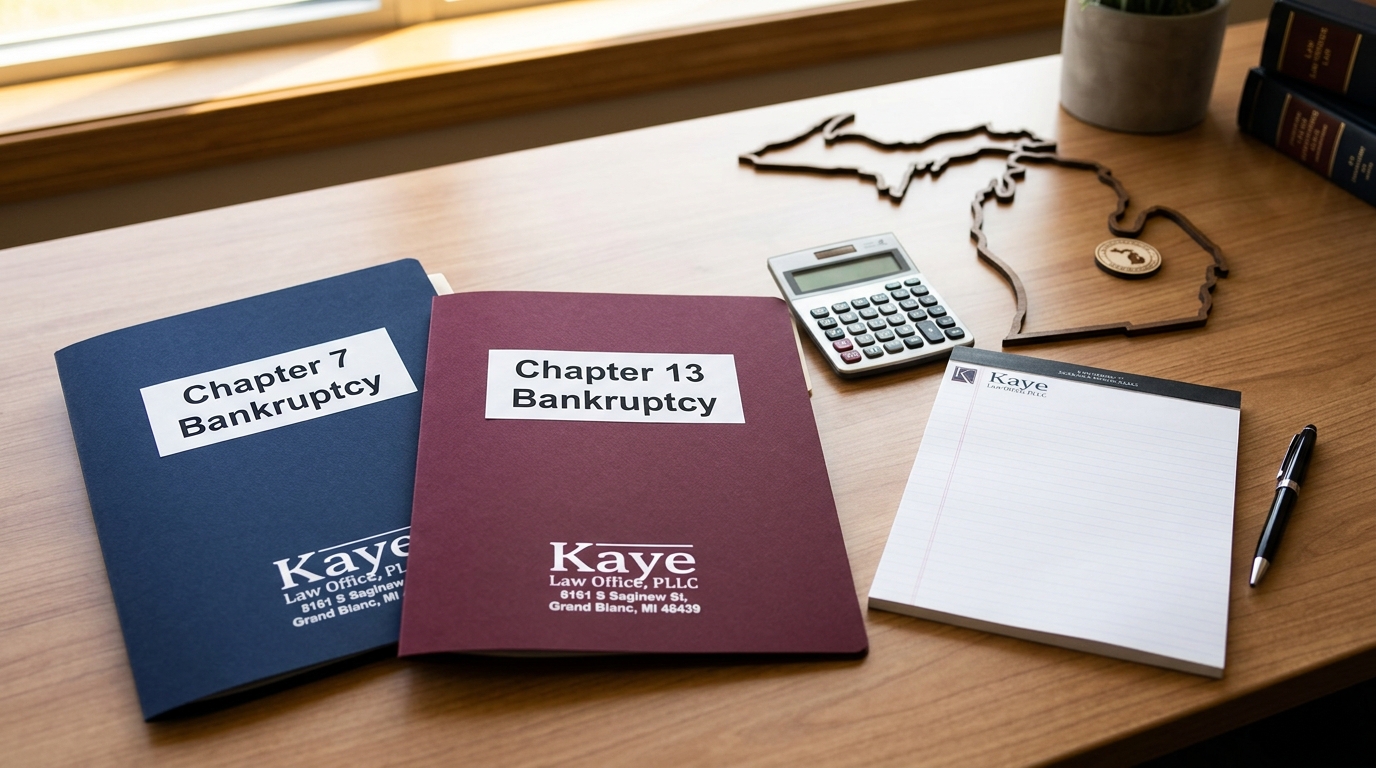
Chapter 7 vs. Chapter 13 Bankruptcy in Michigan: Which Path May Fit Your Situation?
If debt has become difficult to manage, understanding the difference between Chapter 7 and Chapter 13 bankruptcy can be an important first step. Both are federal bankruptcy options available to eligible Michigan residents, but they work in very different ways. A conversation with a Chapter 7 lawyer in Michigan or a Chapter 13 lawyer can help you evaluate which approach may fit your finances, property, and long-term goals.
At Kaye Law Office, PLLC, we work with individuals and families in Grand Blanc, Genesee County, and surrounding Michigan communities who need clear, personalized information about their options. Bankruptcy is not a one-size-fits-all process, and the right path depends on the details of your situation.
Chapter 7 and Chapter 13: The High-Level Difference
Chapter 7 is often called liquidation bankruptcy. Its primary purpose is to discharge, or eliminate, qualifying unsecured debts for eligible filers. The process is generally shorter than Chapter 13, although timelines and outcomes vary from case to case.
Chapter 13 is commonly known as reorganization bankruptcy. Rather than seeking a discharge right away, a filer proposes a court-approved repayment plan that typically lasts three to five years. The plan may allow a person to catch up on certain past-due obligations while making payments based on income, expenses, debt, and other legal requirements.
Neither option is automatically “better.” The appropriate choice can depend on household income, the type and amount of debt, assets, mortgage or vehicle status, and personal financial objectives.
Eligibility Considerations for Chapter 7
Eligibility for Chapter 7 often involves a means test, which compares household income with applicable state median-income figures and considers certain allowed expenses. Some individuals qualify based on income, while others may qualify after a more detailed review of their finances. Prior bankruptcy filings can also affect eligibility and timing.
A Chapter 7 bankruptcy attorney in Grand Blanc can help review pay records, household size, expenses, assets, and debt before a case is filed. This preparation matters because a bankruptcy petition requires complete and accurate financial disclosures.
Qualifying for Chapter 7 does not necessarily mean it is the preferred option. For example, someone who is behind on a mortgage or vehicle loan may need to consider whether Chapter 13 offers tools that better address those arrears.
Eligibility Considerations for Chapter 13
Chapter 13 is generally available to individuals with regular income who are within applicable debt limits. Regular income does not always mean a traditional salaried job; however, the person filing must be able to support a proposed repayment plan.
A Chapter 13 lawyer will typically look closely at monthly income, necessary household expenses, secured debts, priority debts, and the amount that may need to be paid through a plan. Because the plan lasts several years, it should be realistic and structured around the filer’s actual financial circumstances.
For some Michigan residents, Chapter 13 may be considered when income is too high for Chapter 7, when there are assets that require additional protection planning, or when there is a need to address missed mortgage or vehicle payments over time.
How Unsecured Debt May Be Treated
Unsecured debt is debt that is not tied to collateral. Common examples include credit card balances, medical bills, personal loans, and some old utility accounts. In Chapter 7, many qualifying unsecured debts may be discharged, subject to the rules of the Bankruptcy Code and the facts of the individual case.
In Chapter 13, unsecured creditors may receive payments through the repayment plan. The amount paid can vary significantly. It may depend on disposable income, the value of nonexempt property, priority obligations, and other factors. After a successful completion of the plan, remaining eligible unsecured balances may be discharged.
Not every debt is treated the same way in either chapter. Certain obligations, such as many student loans, recent taxes, domestic-support obligations, and debts arising from particular conduct, may be nondischargeable or subject to special rules. A debt relief attorney can explain how those rules may apply to specific debts.
Repayment Plans and the Chapter 13 Process
A Chapter 13 plan usually runs for three to five years. During that period, the filer generally makes regular payments to a Chapter 13 trustee, who distributes funds to creditors as required under the plan.
Plans often address priority obligations, such as certain taxes or domestic-support arrears, before or alongside other debts. They may also provide a structured way to cure mortgage arrears or bring a vehicle loan current. The exact payment amount is not based on one simple formula; it requires a detailed analysis of income, expenses, property, debt, and applicable bankruptcy requirements.
Because life can change during a multi-year repayment plan, it is important to obtain individualized advice before filing. Changes in income, employment, family circumstances, or expenses can affect a person’s ability to complete a plan.
Assets, Exemptions, and Property Protection
One common concern is whether filing bankruptcy means losing everything. In many cases, applicable exemptions may protect certain property, but exemptions have limits and their use depends on the circumstances. Michigan residents may have exemption choices that require careful evaluation.
Assets can include household goods, savings, retirement accounts, real estate, vehicles, business interests, and potential legal claims. Full disclosure is essential. Before filing, Kaye Law Office, PLLC helps clients identify what they own, assess available exemptions, and understand possible risks under the relevant chapter.
People who are also thinking about wills and powers of attorney, estate planning, probate administration, or real estate deed drafting may benefit from coordinated legal guidance. Property ownership and estate-related documents can be relevant to a bankruptcy review, especially when a home, inherited property, or jointly owned real estate is involved.
What Happens to a Home or Vehicle?
Whether someone can keep a home or vehicle depends on several facts, including equity, exemption availability, the status of mortgage or auto-loan payments, and the bankruptcy chapter selected. A bankruptcy filing does not automatically eliminate a mortgage or car loan, and secured creditors retain rights in their collateral.
In Chapter 7, a person who wants to keep secured property may need to continue making payments and meet other applicable requirements. If there is substantial nonexempt equity, additional analysis is especially important.
In Chapter 13, a repayment plan may provide an opportunity to address certain past-due amounts over time while ongoing payments continue. This can be particularly relevant for a homeowner facing mortgage arrears or a driver who needs a reliable vehicle for work and family responsibilities. The availability and effect of these options depend on the facts, loan terms, and bankruptcy law.
Why Individual Legal Advice Matters
Online information can explain broad differences between Michigan bankruptcy options, but it cannot evaluate your income, debt, property, goals, and legal risks. Even two people with similar credit card balances may need different strategies because one owns a home, one is behind on a vehicle loan, one expects an inheritance, or one has a tax obligation. Bankruptcies are very fact specific, each case is individual to that person's needs, and an attorney can provide the individual analysis needed.
As a Michigan law firm, Kaye Law Office, PLLC provides direct, attentive guidance for people seeking to regain financial stability. Attorney Roxane Kaye works with clients to review the facts, explain the practical considerations, and help them make informed decisions about bankruptcy and related legal issues.
FAQ
Will Chapter 7 erase all of my debts?
Not necessarily. Many unsecured debts may be eligible for discharge in Chapter 7, but some debts are not dischargeable or are subject to special rules. The outcome depends on the type of debt and the facts of the case.
Can Chapter 13 help if I am behind on my mortgage?
Chapter 13 may allow eligible filers to propose a plan for addressing certain mortgage arrears over time. Whether that approach is available or workable depends on income, mortgage terms, equity, expenses, and other factors.
Do I have to give up my vehicle in bankruptcy?
Not always. The treatment of a vehicle depends on its value, loan balance, payment status, available exemptions, and the chapter filed. A detailed review is needed before making decisions about filing.
How long does bankruptcy take?
Chapter 7 cases are often completed more quickly than Chapter 13 cases, which usually involve repayment plans lasting three to five years. Actual timing can vary based on the case and court requirements.
Should I speak with a bankruptcy lawyer before filing?
Yes. Speaking with a bankruptcy attorney can help you understand your options before you make decisions that could affect your property, finances, or eligibility. A confidential consultation can provide a clearer picture of whether Chapter 7, Chapter 13, or another approach may be appropriate.
If you are considering bankruptcy in Grand Blanc, Genesee County, or another Michigan community, contact Kaye Law Office, PLLC to schedule a confidential consultation. We can discuss your financial circumstances and help you better understand the next steps available to you.
This article is provided for general informational purposes only and is not legal advice. Reading this information does not create an attorney-client relationship. Bankruptcy law and individual financial circumstances vary, so consult a qualified attorney for advice about your specific situation.